
倚天屠龙记马景涛版
China’s ‘Xuelong 2’ begins first ice station survey in central Arctic Ocean_我的网站

一 | 讯 8月17日,中共山西省委宣传部、山西省人民政府新闻办公室举行“开局起步‘十五五’”系列主题第三场新闻发布会(阳泉市专场)。
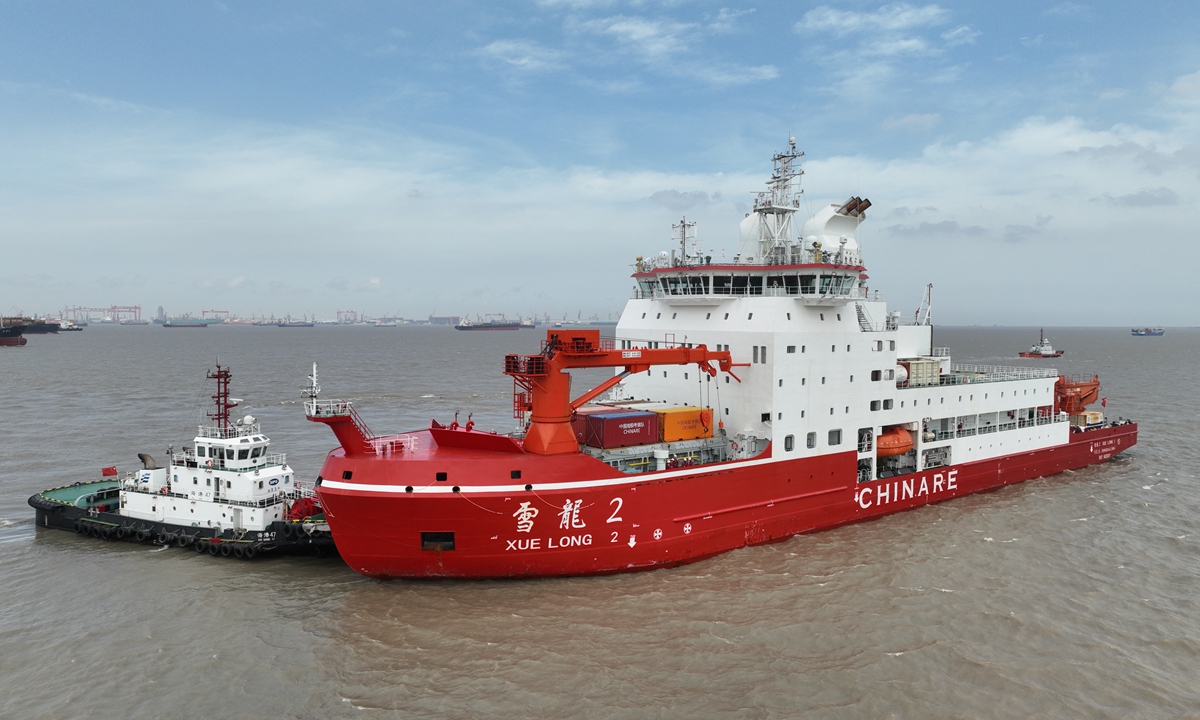
After completing the first stage of comprehensive ocean station surveys on Friday, Xuelong 2 sailed toward higher latitudes and selected a large, relatively flat piece of sea ice about 1.5 meters thick in a densely packed ice zone for its first ice station.
According to Lin Long, captain of the Xuelong 2 sea ice team, the ice station survey conducted by the vessel during this voyage will include six short-term ice stations and one long-term ice station, the Xinhua News Agency reported Sunday.
More than 20 types of scientific operations will be carried out, including the deployment of expendable ice-based buoys, snow and ice-core sampling, under-ice water sampling, sea-ice remote sensing, atmospheric profiling and under-ice oceanographic observations.
Lan Musheng, assistant to the chief scientist of the expedition, said the researchers will comprehensively monitor changes in parameters related to the atmosphere, sea ice, upper ocean and ecological processes beneath the ice as the sea ice melts.
The observations will provide scientific data for studying the rapid changes in Arctic sea ice, the mechanisms behind those changes and the evolution of Arctic ecosystems.
The ice station work is part of China's 16th Arctic Ocean scientific expedition, which was organized by the Ministry of Natural Resources. The expedition set sail from Dalian, Northeast China's Liaoning Province on July 3.
The mission is being carried out by four vessels - Xuelong, Xuelong 2, Jidi and Tansuo-3 - and is expected to be completed in early October.
The expedition is focusing on comprehensive surveys of sea ice, hydrology, biology, ecology and the atmospheric environment in key areas of the Arctic Ocean.
The two icebreakers Xuelong and Xuelong 2 will work together on the ice station surveys. Xuelong completed surveys at 12 ice stations on Friday.
Lin said the ice station locations planned for Xuelong 2 will work in coordination with those of Xuelong to form an observation array.
The arrangement will allow researchers to more deeply investigate the interactions among the atmosphere, sea ice and ocean in the central Arctic Ocean amid rapid environmental changes, as well as their coupling effects with the ecosystem.
The expedition is being conducted against a backdrop of rapid changes in the Arctic environment.
When the mission was launched in July, expedition leader Wang Jinhui said that global warming was driving rapid and profound changes in the Arctic natural environment, with trends such as sea-ice melting intensifying.
The expedition is therefore designed not only to monitor environmental changes but also to investigate frontier scientific questions, including the dynamic evolution of the oceanic crust.
Working on sea ice also presents significant safety challenges. Low temperatures and complex ice-surface conditions can pose risks to researchers, while polar bears are considered the biggest safety risk during ice station operations.
The expedition team has therefore formulated specific bear-prevention and emergency response plans and equipped personnel with various types of bear-deterrence equipment and emergency supplies to ensure their safety.
。 会上,阳泉市副市长李燕斌介绍,进入“十五五”,阳泉的总体目标是争取到2030年,全市数字经济核心产业增加值增速稳定保持在8%以上。重点要办好四件事。

二 | 升级阳泉的数字基础设施。要把“算力经济”做大做强。现在常讲的AI大模型、智能算法这类高端数字产业,都需要有基础的硬件设施做支撑,首先需要高速网络,所以下一步的发展方向,就是5G-A、千兆光网、6G应用试点;其次需要超级算力,要加快百度、云峰的扩容升级,主动融入环京津冀算力走廊布局,争取更多的政策支持;第三需要电力供应,将深化“绿电+算力”协同发展,推进绿电直连试点落地。只有将这些基础工作做得更扎实,才能吸引更多的数字企业来阳泉落户,从而带动本地的就业和增收。 研究人工智能更多的应用场景。研究人工智能技术的目的就是为了应用,让它服务于生产生活。再好的技术如果束之高阁,如果没有合适的应用场景,就等于没有。

三 | 所以要结合阳泉的产业结构,率先从煤炭、化工、新材料、装备制造这些优势传统产业开展场景创新应用。比如煤炭行业,首要任务是智能化升级改造,在智能采掘、智能监控、无人值守等成熟场景中提升矿山生产自动化、管控精准化、风险预警智能化水平。

四 | 再比如,还要推动传统制造业数字化重塑,把AI应用到生产调度、质量管控、设备运维、能耗管理等全流程,打造一批自动化数字车间、智能工厂,让阳泉的老工业企业也能够跟上智能化发展的浪潮。有了基础设施和应用场景,接下来就是数据。 发掘数据的实用价值。数据是资源,是财富,也是人工智能的各类应用场景的基础要素,这就好比是做一盘好菜的重要食材。下一步,要努力打通各部门数据,做好数据共享,稳妥推进公共数据合规授权运营、有序流通和价值转化。

五 | 为人工智能在城市治理、民生服务、应急安全、交通文旅、医疗卫生等领域的场景应用,提供一批高质量数据集,实现交通拥堵自动疏导、突发险情快速预警、景区智能导览等功能。以后不管是市民办事,还是城市日常管理,都会更加省心省力省时。以上讲的这三件事都需要有运营的载体。 培育更多新兴数字产业。将推动智能网联产业规模化发展。完成省级数据标注产业试点建设,壮大数据加工产业。

六 | 培优育强智能终端、软件开发、数字服务等核心业态。前瞻布局具身智能、北斗应用、卫星互联网等未来产业赛道,培育特色鲜明、链条完善的数字经济产业集群。版权申明:凡注有“”或电头为“”的稿件,均为独家版权所有,未经许可不得转载或镜像;授权转载必须注明来源为“”,并保留“”的电头。 。
Current article:http://nn5rza.laojiusidaosenleliao.bond/8ttil1f/20260826/236762.html
Published on:02:55:58